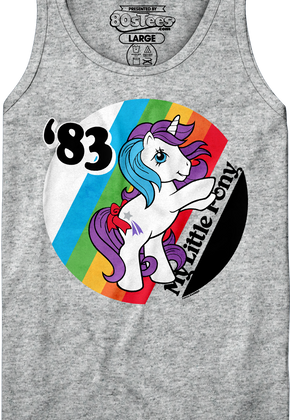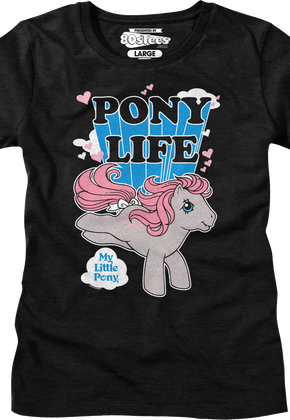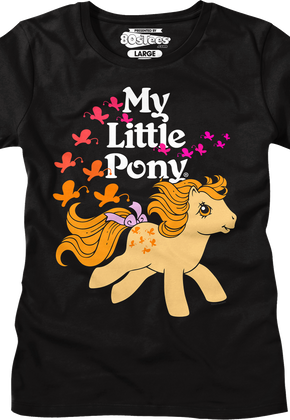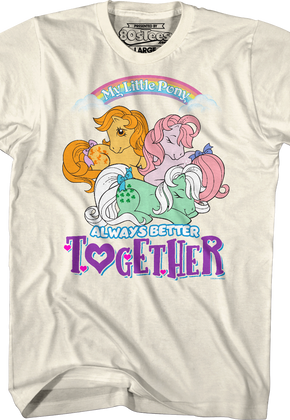

It may be hard to believe, but
the "My Little Pony" line's beginnings started with a toy horse that really
wasn't all that little. In 1981, Romper Room, a division of Hasbro, introduced
"My Pretty Pony", a 10-inch tall model horse with synthetic hair, many
accessories, and a mechanism which enabled her ears to twitch, eye to wink, and
tail to swish from side to side. The original version was a classic brown horse,
but later on that year Hasbro introduced a second version of the toy. My Pretty
Pony was now a light pink shade with a darker pink mane and tail. She also had
heart symbols painted on her hip (which would become a main feature of her
smaller descendants) and her accessories were now softer, more feminine pastel
shades.
In 1982, Hasbro decided to
expand on this idea and introduce a line of smaller My Pretty Pony-style toys
called "My Little Pony". These petite ponies stood just 5" tall and were
available in various pastel colors, each with a different coordinating symbol on
their hips. The company originally released six different ponies, Cotton Candy,
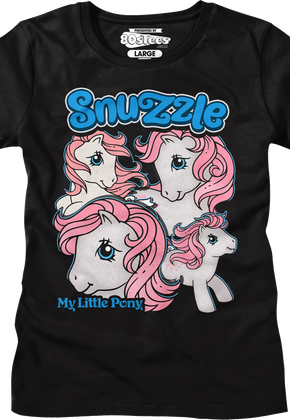
Butterscotch, Blossom, Blue Belle, Minty, and Snuzzle. Butterscotch was also
available in a set with the brown "My Pretty Pony" that year, as MPP's baby. In
many ways, one might think of MPP as the "mom" in the My Little Pony collection,
though she was never officially deemed so. The MLP collection was off to a
great start, which triggered Hasbro to introduce more ponies to the family. Not
only did they add new "Earth Ponies" (or classic-style horses) like Applejack
and Bow Tie, but they also added Unicorns and Pegasus to the mix, such as Glory
and Firefly. Additionally, ponies were now available in different poses such as
sitting (Seashell and Bubbles are the only two ever made in this position),
"prancing", and the front legs of the Pegasus were up as if they were "flying".
Other additions to the MLP collection followed, including Rainbow Ponies, Sea
Ponies, and Baby Ponies.
Like most popular toys of the
1980's, eventually its success spawned a cartoon to coincide with the
collection. In 1984, a half-hour television special about the ponies was
produced by Marvel and Sunbow Productions (who are also famous for their work on
the Jem and the Holograms cartoon series). The story revolved around a
young girl named Megan who was brought to the magical world of "Ponyland" to
help the ponies in time of need. The following year, another special about the
MLP clan debuted, called My Little Pony: Escape From Catrina. With the
continued success of the toy line and the two television specials, it didn't
take long for the ponies to be featured in their own feature-length movie. In
1986, My Little Pony: The Movie made its debut and a TV series soon
followed. The series continued to tell tales of Megan's adventures with her
animal friends, and eventually introduced her brother Danny and sister Molly,
who also had the privilege of visiting Ponyland. Soon, Hasbro produced a Megan
doll and various other toys based on the cartoon series.
The show lasted for about three
years, but MLP toys continued to be manufactured despite the series' end. In
1992, a new cartoon debuted on the Disney Channel. "My Little Pony Tales" was
quite different from the previous series--Megan and her siblings were no longer
featured and the ponies now had the ability to walk on just two legs. The
ponies now embarked on more human-like adventures instead of the mystical,
magical ones that preceded. This series was not nearly as popular as the first,
possibly for the above-mentioned reasons, and was canceled after only 26
episodes. The line of toys was also discontinued that year, a decade after
their introduction, due to decreasing sales.
In 1997, the toys were
re-introduced, but this time the ponies received quite a makeover. They were
now thinner and more petite with longer legs. Several new ponies and playsets
were manufactured; however they were not as successful in the United States as
the first MLP line. They were only available in the U.S. for about a year,
though they remained quite popular in other countries. In 2003, Hasbro made
another attempt at bringing back the MLP collection. These newer ponies were
more like the originals, except with a few minor changes, such as their symbol
being printed on only one hip rather than both. This third line of toys seemed
to be just what Hasbro was looking for, with new ponies continuing to be
produced to date.
Collectors
of MLP can find all sorts of additions to their assortments, from vintage
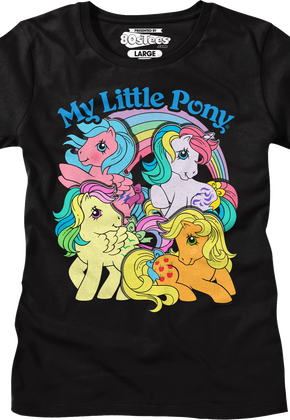
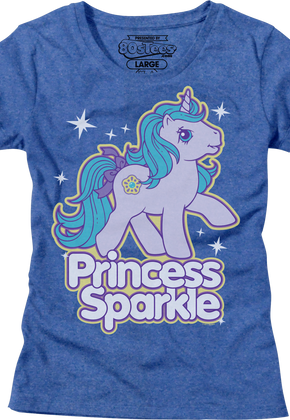
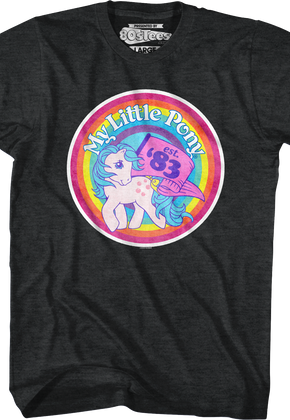
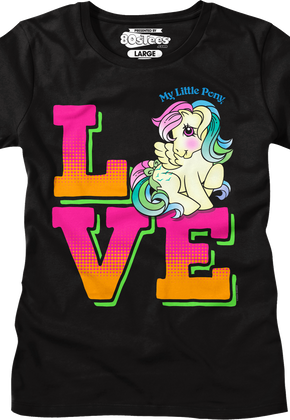
first-generation toys, to t-shirts, stickers, accessories, and more. Little did
the world know that Hasbro was onto a good thing when they first developed their
idea for a toy horse over 20 years ago.